

If you’ve spent any time in healthcare technology, you’ve probably seen EMR and EHR used interchangeably. But as healthcare has evolved, the distinction between the two has become more than semantics.
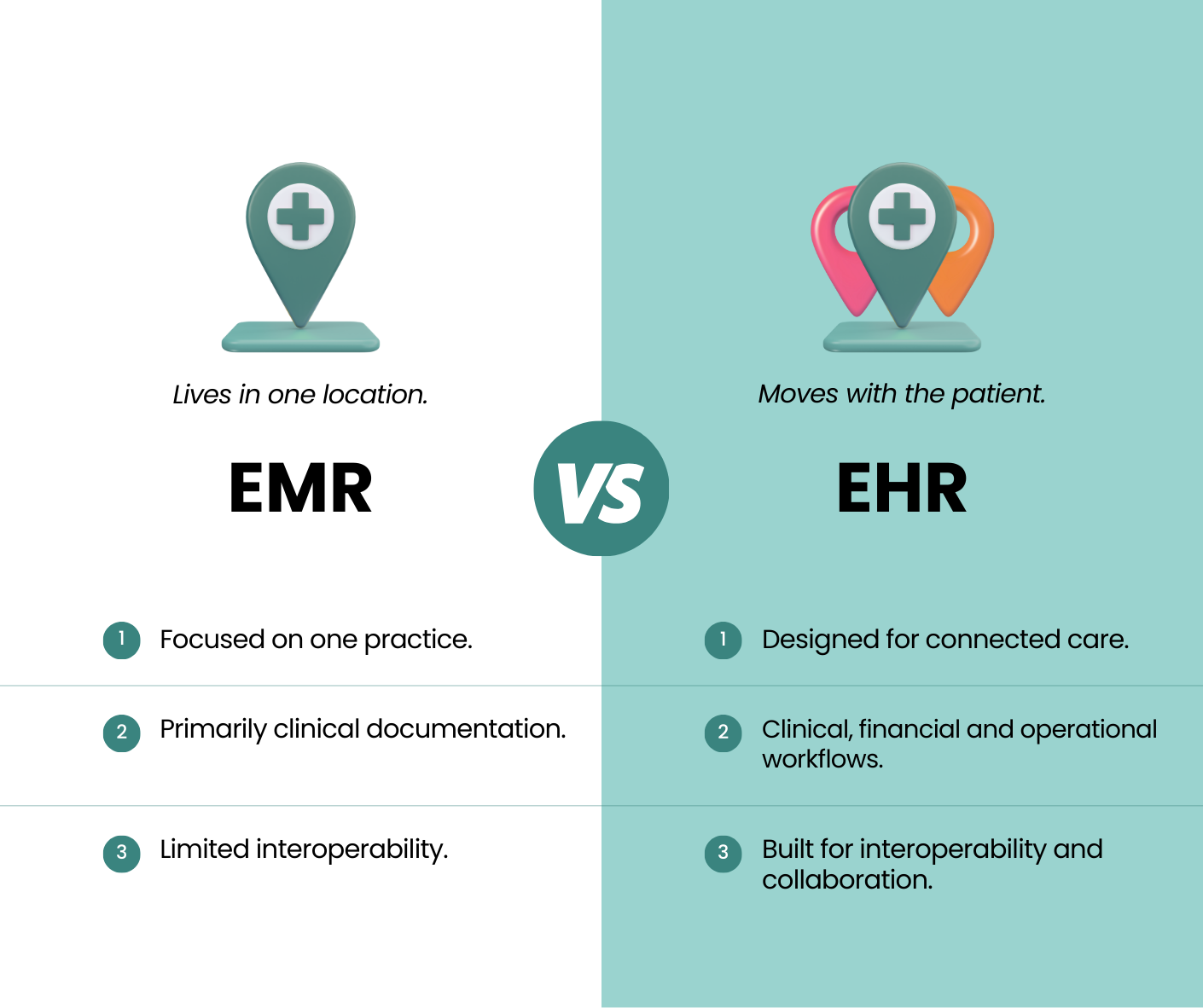
An Electronic Medical Record (EMR) is the digital version of a paper chart within a single practice. Think of an EMR as a modern filing cabinet:
EMRs are designed primarily to support internal documentation and workflows. They do this job well, but they typically live within the four walls of one organization.
In short: EMRs digitize care, but they don’t always connect it.
An Electronic Health Record (EHR) goes a step further.
EHRs are built to support care beyond a single encounter or organization, enabling health information to move with the patient across the healthcare ecosystem.
An EHR typically supports:
If an EMR is a snapshot, an EHR is the full story.
medent has always been more than a digital chart.
From practice management and revenue cycle tools to eligibility, claims, remittances and patient engagement, medent has long supported the full lifecycle of care. As healthcare has become more connected — and expectations for interoperability, efficiency and intelligence have grown — the term “EMR” no longer tells the whole story.
Referring to medent as an EHR better reflects:
This language shift isn’t about chasing buzzwords. It’s about clarity.
You’re not losing anything; you’re gaining context.
As medent evolves, you’ll continue to see:
Calling medent an EHR simply aligns our name with the way our users already experience the platform.
Healthcare doesn’t happen in silos anymore, and software shouldn’t either.
As part of our rebrand, embracing the term “EHR” reflects medent’s role in connected, modern care delivery today, and where we’re headed next.
Same medent. Clearer definition. Bigger picture.