
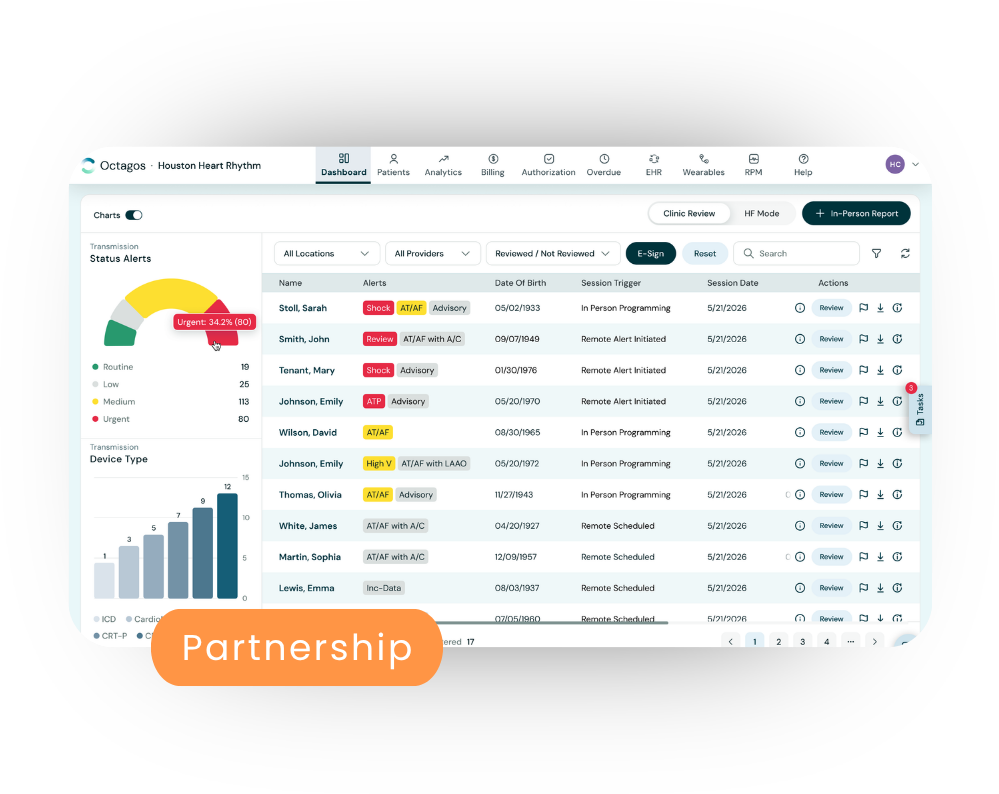
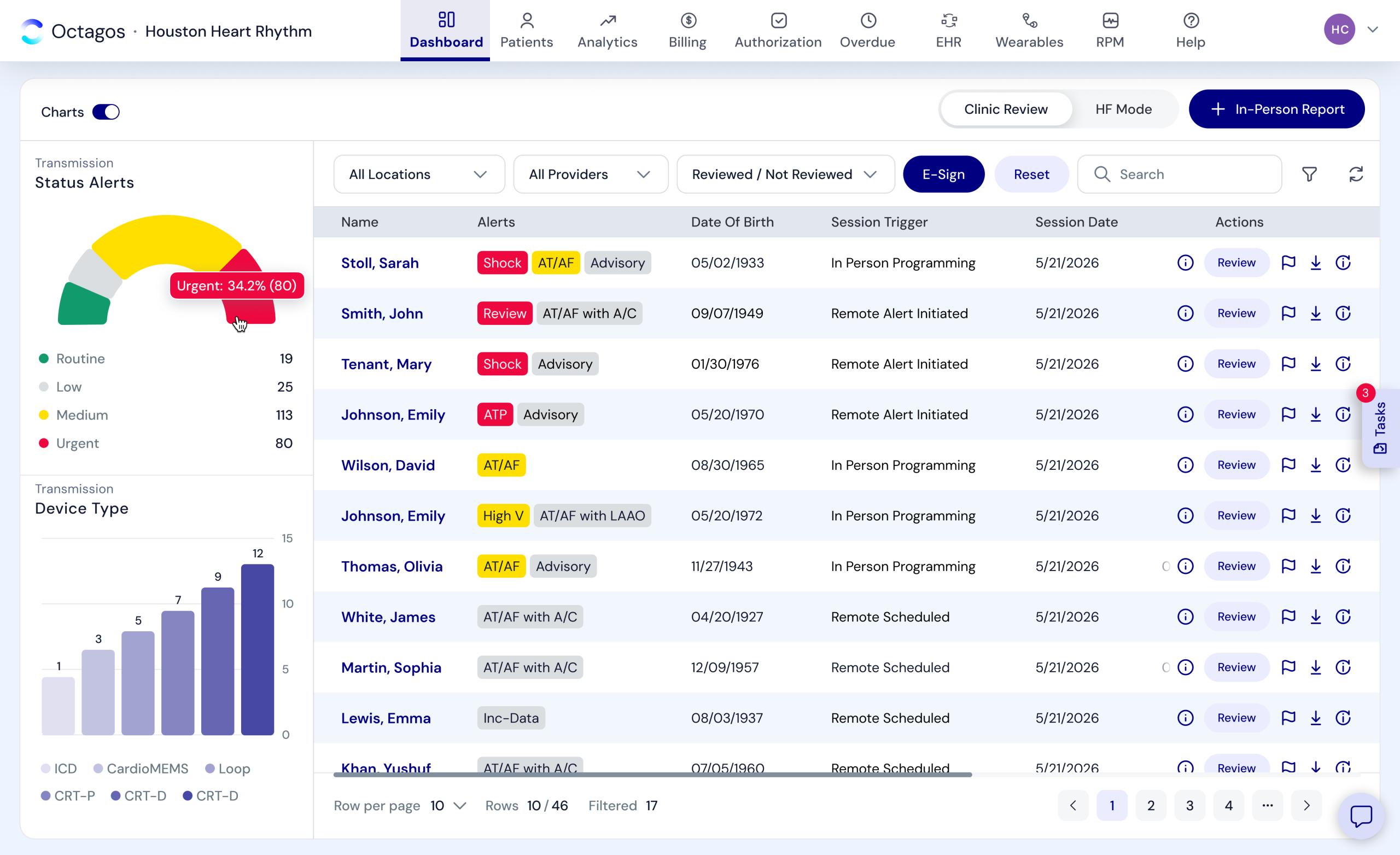
Octagos’s integration with medent gives independent and community cardiology practices the same real-time, bi-directional EHR interoperability that large health systems have long had. Full chart context comes in the moment a transmission lands, and encounters and e-signed reports go back out automatically. Most practices are live in under 20 business days, with no setup or maintenance fees.
Independent and community cardiology practices carry the same clinical responsibility as the big health systems. They run the same device-heavy remote monitoring programs, with a fraction of the IT staff and none of the enterprise integration budget. For years, the interoperability tooling that could lighten that load was priced and built for the largest systems in the country. Everyone else bridged the gap by hand, copying, pasting, reconciling, and re-keying data instead of caring for patients.
medent has earned a loyal following precisely because it understands that clinic. So when we integrated Octagos with medent, the goal went beyond moving data between two databases: give medent practices the same real-time, bi-directional interoperability the enterprise systems have long had, without the cost or the IT overhead that usually comes with it.
A large health system can absorb a full-time integration analyst. A lean community practice cannot, so every un-integrated transmission becomes work a device specialist has to do by hand.
As I wrote in Breaking Down Data Silos, every remote monitoring clinic is, at its core, a data clearinghouse. Transmissions arrive from multiple device manufacturers. Demographics and billing live in the EHR. Clinical context lives in the chart. When those systems do not talk to each other cleanly, the staff becomes the integration, and that gap hurts the independent practice most.
CIED volumes keep growing, but staff headcount does not grow with them. Every transmission that forces a device specialist to toggle between medent and a manufacturer portal is time the practice cannot spare, and without integration, every new patient adds linear workload to a team that is already at capacity.
Real bi-directional integration means clinical context flows into medent automatically and finished work flows back out automatically, with no human moving data by hand in either direction. That is a different thing from what the industry often calls “integration.” A nightly batch file drop is a delayed one-way sync. A one-way PDF export is a document drop, not usable data. Neither one writes anything back into medent on its own.
For the medent integration, that split runs both ways:
medent stays your system of record through all of it. Octagos enriches the chart; it doesn’t compete with it.
Clean data movement is the foundation, but the automation layered on top of it is what returns hours to the practice. The medent integration runs the full Octagos automation stack, and every automated step is backed by certified human review:
The output is not just fast, it is clinically trustworthy, which is the standard a lean clinic with no second layer of review has to hold.
It is built specifically for the independent and community practices medent serves, not adapted from an enterprise rollout, so the workflow removes steps instead of adding configuration screens.
Most medent integrations go live within four weeks, with average onboarding under 20 business days, and your existing remote monitoring continues uninterrupted through cutover. That speed comes from a dedicated integration playbook and the largest development team in the space: Octagos has delivered 200+ EHR integrations across the cardiology landscape.
The Octagos team carries the integration work. Your team confirms data definitions and validates test patients. There is no downtime during cutover, and in every case, milestones and security reviews are agreed up front, no surprises.
For practices migrating off a legacy device-clinic system, Octagos has also completed full SQL migrations of Paceart environments, 12M+ pages of patients, devices, encounters, and discrete data.
Yes. A small practice carries the same regulatory exposure as a large one, so the integration runs under the same enterprise-grade security standards regardless of practice size:
The compliance posture does not scale down just because the practice is independent.
Practices have already seen these results within 90 days of going live. Lehigh Valley Health Network improved billing efficiency from 68% to 94% within 90 days of going live on Octagos, capturing revenue that was previously slipping through the cracks without adding a single person to the billing team.
Dr. Joey Sager at the Chicago Cardiovascular Institute put it this way: Octagos “held true to its timeline of integration with our EMR. Huge upgrade for our team and our patients.”
Interoperability is not an IT footnote. The practices medent serves carry the same clinical load as the big systems, and they deserve the same standard of integration: real-time, bi-directional, automated, and backed by certified clinical oversight, without the enterprise price tag or the enterprise timeline.
That is the bar the medent integration was built to meet: the full chart, in context, inside your monitoring workflow, with reports and claims flowing back automatically.
To learn more, read more in our Learning Center or book an integration assessment.