
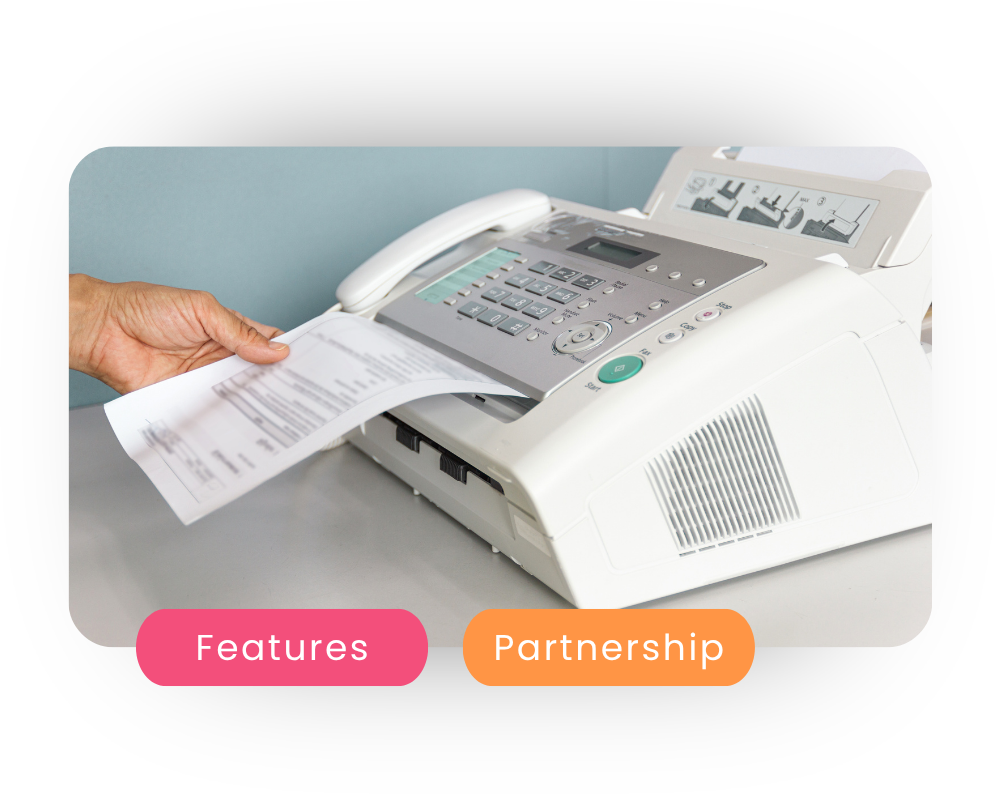
Every healthcare practice knows the challenge.
Faxes, referrals, lab reports, insurance forms and clinical documentation are constantly flowing into the organization, creating an ongoing need for accurate document sorting, indexing and routing. Managing that volume manually can place significant pressure on administrative teams while also impacting workflow efficiency.
That is why medent is excited to partner with InDxLogic, bringing advanced automated document indexing capabilities directly into the medent workflow.
Document indexing is more than an administrative task. It plays an important role in helping providers access patient information quickly and accurately.
As discussed in the latest medent podcast episode featuring InDxLogic:
“It’s a very important process from a patient perspective, which is the most important piece of this,” said Michael Pendleton, Senior Vice President of InDxLogic. “Errors can impact the speed in which patients are taken care of.”
Healthcare organizations also face a constant balancing act between staffing resources, turnaround times and operational costs.
“If they hire too many people, they’re losing profitability, and if they don’t hire enough, they’re creating more errors because they’re trying to keep up in a very crazy world.”
Automated document indexing uses AI-driven technology to identify patient information, document types, dates of service and routing destinations automatically, helping practices improve both speed and consistency.
“The computer can make all those decisions for you now extremely accurately, very quickly and very securely.”
For healthcare organizations managing large document volumes, manual indexing can become both time-consuming and costly.
As discussed during the podcast episode, organizations relying heavily on manual workflows may spend between $1.50 and $2 per document when accounting for staffing resources, document turnaround expectations and operational overhead.
The value of automated document indexing extends beyond reducing manual work. Organizations can also improve consistency and create more scalable workflows through standardized document naming conventions.
“One thing they notice is the speed in which documents are now arriving back into the chart,” Pendleton said. “And the next thing that they notice is that there’s more consistency in the naming convention.”
More consistent naming conventions can help simplify document retrieval, reduce workflow confusion and improve operational organization across departments.
Automation also creates opportunities for resource reallocation, allowing staff to focus on higher-value responsibilities instead of repetitive document filing tasks.
“Now they’re providing a value-added task of reaching out to patients instead of filing documents.”
By combining intelligent automation with more standardized workflows, healthcare organizations can improve operational efficiency while allowing teams to spend more time focused on patient communication and support.
To learn more about the medent partnership with InDxLogic and hear the full conversation around AI-driven workflow automation, document management challenges and the future of intelligent indexing in healthcare, listen to our latest podcast episode.
Also available on Spotify.